
Why can I understand but not speak a language?
If you understand well what you hear but freeze when speaking, know that this is extremely common — and there's an explanation. There is a big difference between knowing a word and mastering it to the point of using it in a conversation.
A simple example: if you speak Portuguese, you probably understand Spanish easily. But can you speak Spanish? Comprehension does not guarantee production. To speak without thinking about each word, you need to master it, not just know it.
How to develop the ability to speak a language?
1. Listen a lot — it’s the foundation of everything
To speak, you must first listen. This is how children learn: they listen for months before pronouncing their first word. Listening builds the foundation upon which speaking develops.
The key points of the content you should listen to:
- You should understand most of it
- It should be about something that genuinely interests you
2. Practice alone
It may seem strange, but talking to yourself is something that almost all polyglots do. Each week, you will feel more prepared and confident. By speaking alone, you identify your strengths and areas where you need to improve.
The ideal is to create imaginary conversations — ask yourself questions and answer:
- “Why did you decide to learn French?” — “I decided to learn because…”
- “Have you thought about living in France?” — “Of course, it's one of my goals!”
You can practice in the shower, in the car, while cooking — any moment of your downtime is suitable.
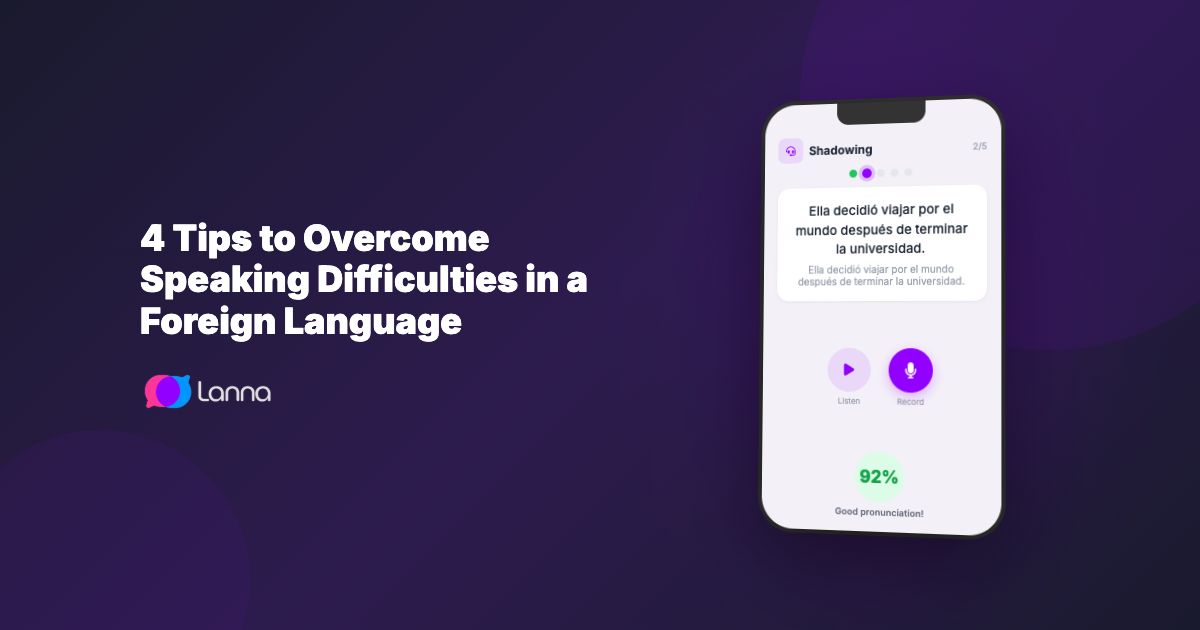
3. Do Shadowing
Shadowing is the technique of imitating another person's speech in a video or audio. It is one of the most powerful tools to improve pronunciation and fluency.
Follow this step-by-step guide for an effective shadowing session:
- Choose a short video (maximum 5 minutes) with subtitles in the language
- Watch it twice with subtitles, paying attention to the content
- Write down words and expressions you don’t know
- Watch it again and speak along with the video
- Turn off the sound, play it, and speak using only the subtitles as support
- Finally, watch it one more time, paying attention to pronunciation
This process takes about 30 minutes and is an excellent daily study model. The next day, repeat the sequence — repetition is key.
4. Talk to people online
Language exchange apps allow you to find people to chat with for free. In this exchange model, you speak in the other person's language for a while, and they speak in yours.
Mutual interest facilitates the creation of a real connection and makes the conversation flow naturally. Paid platforms for one-on-one lessons with native teachers are also an excellent option.
5. Speak in your daily life
Whenever possible, incorporate the language into real situations. Ordering food in a restaurant, greeting someone, asking a question — each small interaction builds confidence.
How does Lanna help unlock your speech?
Lanna offers study modes specifically focused on speaking:
- Pronunciation: record your voice, and the AI compares it to the original audio, giving a score and feedback
- Speaking: converse by voice with the AI about the content you are studying
- Chat: practice written responses in smart conversations
All this using content you chose and that genuinely interests you.
Start practicing with Lanna — unlock your speech with artificial intelligence.