

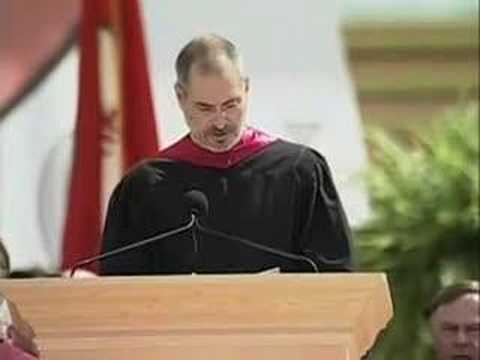
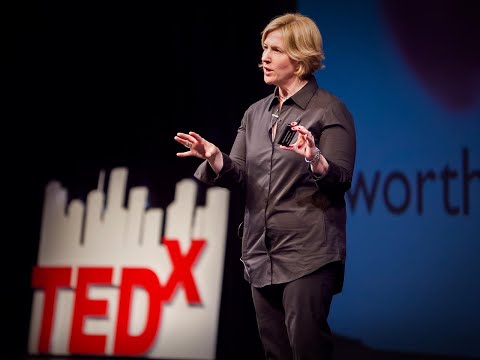

YouTube is the largest free English course in the world — but 99% of people choose the wrong video and give up. Lanna solved this by curating a library of movies, series, TED Talks, interviews, and songs organized by category and level. Here I show you how to use YouTube to truly learn English in 2026, with or without the ready-made library.
Look, I always say in videos that YouTube is the best free resource for learning languages that exists. It has everything. Movies, series, classes, music, interviews, vlogs of ordinary people talking about things that interest you. It's infinite. It's free. And it's real — English from real people, not textbook English from 1998.
But there’s a little problem: 99% of people choose the wrong video. They pick a super fast video, without subtitles, with a heavy accent, and technical vocabulary. They watch 2 minutes, understand nothing, get frustrated, and close it. Then they say, "oh, YouTube doesn’t work for me." It does work, my friend. You were just choosing the wrong video for your level.
In this post, I’ll show you how to use YouTube to truly learn English in 2026 — what type of video to choose by level, how to turn any video into a real lesson, and, most importantly, how to use the curated library we created here at Lanna (a Brazilian language learning platform with AI) to skip the boring part of digging through YouTube manually.
Why is YouTube so good for learning English?
Because it kills the boredom of traditional courses. You study with what interests you. Like cooking? There’s a beginner-level cooking channel in English. Like soccer? There’s one. Like history? Tech? Basketball? True crime? It’s all there. And the most important: you choose the level and the topic, unlike in a language school where you have to swallow the material the teacher prepared for the whole class.
Another huge advantage is that YouTube English is real English. It’s how people speak on the street, at work, in bars. It’s not course English like "Hello, how are you? I am fine, thank you, and you?" It’s people making mistakes, coughing, interrupting, using slang, laughing. This trains your ear for real English, not the kind that only exists on tests.
The problem: 99% of people choose incorrectly
The golden rule for choosing a video is the 80% rule: you need to understand at least 80% of what is being said. Always. If you understand less, the video is too advanced for your level — drop down a level. If you understand almost everything (95%+), the video is too easy — go up a level to push yourself.
This is the concept of comprehensible input that Stephen Krashen defined in the 80s — input slightly above your current level (i+1). Not too easy (otherwise you don’t learn anything new), and not too hard (otherwise you give up). Exactly the point where you understand most and have to stretch a little for the gaps.
The second common mistake: trying to watch without subtitles from the start. This is a total blunder. English subtitles are your best friend — they associate the sound you’re hearing with the written word, and your brain makes the connection on its own. In a few weeks, you’ll be able to follow along without subtitles. But starting without them is unnecessary suffering.
The 5 categories every student needs to know
We organized a curated library of videos within Lanna into 5 categories. Each one trains something different:
What type of video to choose by level?
This changes everything. It’s no use being A1 and trying to watch Christopher Nolan without subtitles. It’s also not useful being C1 and watching "Good morning, this is a table" — a waste of time. Each level has an ideal type:
- A1 (absolute beginner): videos of 1 to 3 minutes, with slow speech, English subtitles AND translation to Portuguese below. Simple topics: breakfast, a day at work, personal introduction. People explaining obvious things. You’ll get frustrated with anything faster — that’s normal.
- A2: videos of 3 to 5 minutes, English subtitles. Routine vlogs, simple recipes, educational cartoons like Peppa Pig (seriously, Peppa is gold for A2). Still avoid series and movies.
- B1 (intermediate): videos of 5 to 10 minutes. Start including short interviews, TED-Ed (short TED with animation), podcasts with video. You can try series but pause a lot.
- B2 (upper-intermediate): full TED Talks (12-18 min), sitcom series without pausing too much, movies with English subtitles, long interviews. Here, YouTube becomes your main classroom.
- C1/C2 (advanced): anything. Movie without subtitles, quick interview with slang, political debate, stand-up comedy. Here, YouTube becomes entertainment that casually keeps you sharp.
If you want to dive deeper, I wrote a whole post on how to choose the right video on YouTube with the 6 characteristics that every ideal material needs to have.
How to turn any video into a real lesson
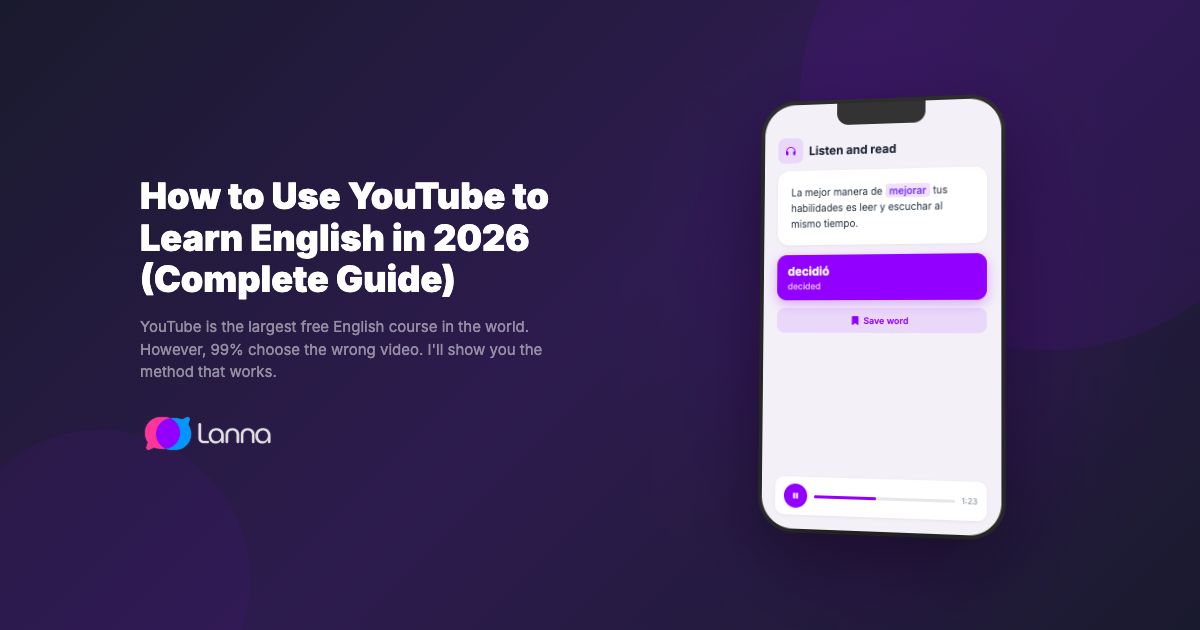
Watching a video passively is entertainment, not study. To be real study, you need to turn the video into interactive material. This means having: synchronized transcription with audio, word-for-word translation, the ability to pause at any point, and save words for later review.
In Lanna, this is automatic: you paste the YouTube video link and the AI does the rest in under 30 seconds. It transcribes the audio, breaks it down into sentences, translates each word, generates exercises, everything ready for study. You don’t have to do anything manually. The video becomes an interactive lesson.
Paste the link → becomes a lesson in 30 seconds
Suggested weekly routine
No need to complicate things. A simple schedule that works for almost everyone coming out of A2 and wanting to unlock:
- Once a week: 1 curated movie (or 2 episodes of a series) with subtitles, without skipping. Long immersion session.
- 2 or 3 times a week: 1 TED Talk (12-18 min) to train focused listening. TED is the best material for this stage.
- Every day: 1 short video (3 to 5 min) on a topic you enjoy. This can be during lunch or before bed.
- While doing other things: music with lyrics in English (gym, in the car, washing dishes). Dead time turning into study.
If you want to build a complete routine with the other 7 study modes, check out the complete guide on how to use AI to learn English that I wrote earlier.
Most common errors when using YouTube
To wrap up, here are the slip-ups I see most often (and that I’ve made myself):
- Video is too difficult. If you understand less than 60%, forget it. It’s beyond your level. Drop down a level without shame.
- Just passive listening. You need to pause, rewind, repeat sentences, save words. If you just watch without pausing, it’s entertainment — it helps, but much less.
- Portuguese subtitles. Hinders acquisition. Your brain just reads the PT subtitles and ignores the EN audio. Use English subtitles whenever possible.
- Jumping straight to series. Series dialogue is super fast and full of slang. Start with more structured videos (TED, long interviews, slow vlogs). Series come when you’re B1+.
- Not repeating the same video. You watched it, thought it was cool, closed it. Done — you forgot everything in 48 hours. Revisit the same video in 3 days, do shadowing on specific sections.
- Not saving new words. Every word you paused to look up, save it in flashcards. Without this, you learn and forget in an eternal loop.
Frequently Asked Questions
Is YouTube better than an English course?
For most people, yes. There’s endless real content, for free, that you choose. Traditional courses give you fixed and expensive material. What YouTube lacks — structure — is what an app like Lanna adds.
Subtitles in English or Portuguese?
English whenever possible. Portuguese only in the first few days if you’re starting from scratch — then switch. Portuguese subtitles activate the lazy brain that just translates.
Which video to start from scratch?
Short (1-3 min), slow speech, English subtitles, simple topic (routine, breakfast, greetings). Avoid movies and series at the beginning.
How much time per day?
15 to 30 minutes focused. 2 hours passively on the weekend yield less than 15 min every day. Consistency beats duration.
Does watching series count as studying?
It counts if you pause, note words, and repeat difficult scenes. If you just watch, it’s entertainment — which helps too, but much less.
Are TED Talks good?
Excellent for intermediate learners. The speaker pronounces every word, has a clear rhythm, and uses accessible academic vocabulary. 12-18 minutes is the sweet spot.
What is the advantage of Lanna's library?
Three: it’s already categorized (movies, series, TED, interviews, music), it’s already by level, and each video becomes an interactive lesson with word-for-word translation.
So, are you ready to start?
Learning English with YouTube in 2026 has no excuses. The material is there, for free, in endless volume. What was missing was curation — someone to separate the right video for the right level. We did that within Lanna. You open the app, choose a category, click on the video that interests you, and start studying. No digging, no guessing, no wasting time on YouTube’s algorithm.