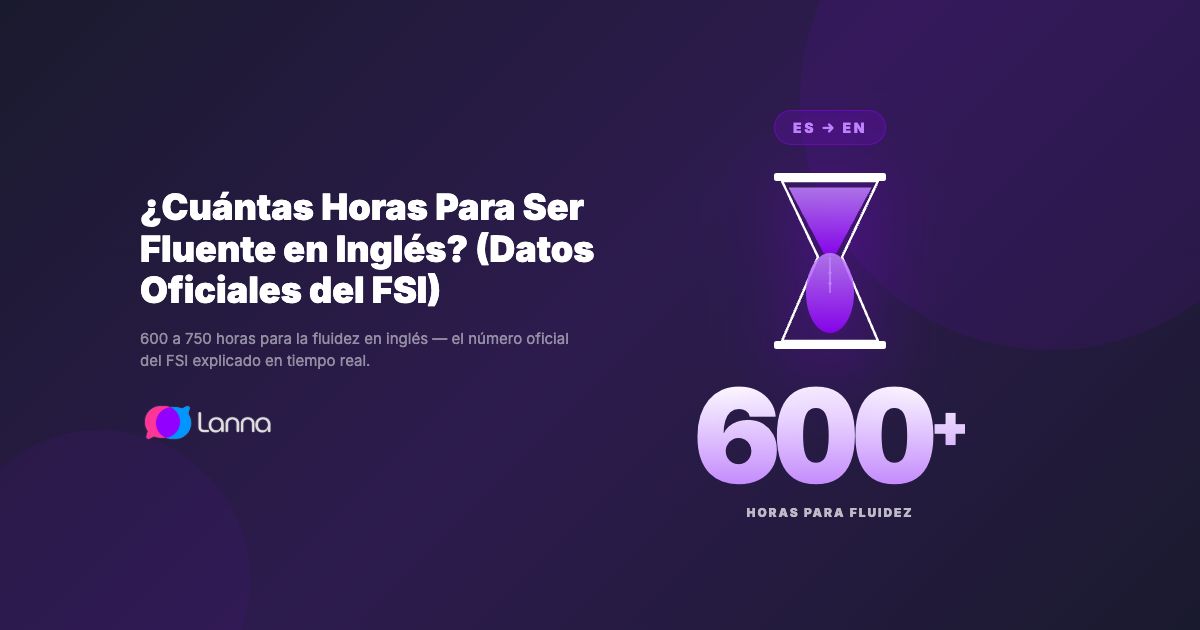

El Foreign Service Institute (FSI) ha medido durante 70 años cuántas horas tarda un adulto en alcanzar B2/C1 en cada idioma. Para que un hispanohablante alcance fluidez profesional en inglés: 600-750 horas. Eso son 1 año y 8 meses con 1 hora al día, o 10 meses con 2 horas al día. El inglés está entre los idiomas más fáciles para hispanohablantes por proximidad lingüística.
Si estudiaste inglés, paraste, volviste, paraste otra vez, y tienes esa sensación de "pero llevo años estudiando..." — quizás estudiaste mucho menos de lo que piensas. La pregunta correcta no es "¿cuánto tiempo he estudiado?", es ¿cuántas horas reales he acumulado?. Y para esa pregunta hay una respuesta oficial.
ES → EN · 600-750h
600 a 750 horas. Es la estimación oficial del FSI para que un hispanohablante alcance B2/C1 en inglés. Por reciprocidad lingüística, el inglés desde el español está en la categoría más fácil del FSI — Categoría I, alongside francés, italiano, portugués.
Why it matters
The number is validated by 70 years of FSI training data. It assumes adult learners with motivation, structured input, active production, and consistent practice. Without these, 600-750 hours can balloon into 2000 — or never.
The fastest gains per hour come from comprehensible input, active speaking with AI, SRS for vocabulary, and stopping mental translation.
Lanna
Lanna automatically tracks your real study hours and shows you where you stand on the FSI curve.
Try Lanna free