
Learning a language on your own in 2026 is entirely possible and even more efficient than traditional courses — if you have the right method. You need: the right mindset (no talent myth), ideal material (comprehensible and interesting), balanced 4 skills (listening, reading, speaking, writing), and a routine of 15-30 minutes every day. In this guide, I compiled everything I teach in the Language Guide videos and adapted it for 2026 tools.
Look, I learned Italian on my own. Then Spanish on my own. Then French. And I can assure you — learning a language without a teacher works. And in 2026, with the tools we have now, it works better than ever. But there's a catch: you need the right method. Without a method, you buy books, download apps, watch series, don’t follow through, and quit in 3 weeks.
In this pillar, I'm going to give you the complete method. It’s what I teach in my videos from the old Language Guide — just updated for 2026 with AI, interactive video, and adaptive flashcards. By the end of this post, you will know exactly what to do every day, for how long, and which path to take.
First: the 5 myths you need to throw away
The biggest barrier to learning a language on your own is not technical, it's mental. Brazilians carry 5 myths that hold them back before they even start. If you don't clear these out first, no method will work.
The method in 4 parts: mindset, material, skills, routine
The whole method fits into 4 parts. It's simple to understand, but it requires consistency. Let's break each one down.
Part 1: Mindset — you learn through the natural method
The natural method is how a child learns their first language: lots of comprehensible input before producing. You listen, listen, listen until you start to understand. Then you try to speak. You make mistakes. You keep going. It’s the opposite of traditional school that wants you producing perfectly from day one.
In practice, this means: consume content before pressuring yourself to speak. In the first weeks, focus on listening to beginner-level podcasts, watching short videos with subtitles in the language, reading simple texts. Production (speaking and writing) comes later when you already have vocabulary in your head to pull from.
Part 2: Ideal material — 3 characteristics + 6 adjustments
Ideal material is comprehensible, interesting, and has the right characteristics. These are the 3 pillars. If any are missing, you’ll give up.
- Comprehensible: you need to understand at least 80% of what you’re hearing or reading. This is the concept of comprehensible input from Krashen. Less than that, you get frustrated. More than 95%, you don’t learn anything new.
- Interesting: about a topic you LOVE. Cooking, sports, technology, history, cinema, music. It doesn’t matter — what matters is that you want to come back. Boring material is death.
- With the right characteristics: audio in the language, subtitles in the language, speed appropriate to the level, correct duration, theme aligned with the level, 80%+ comprehension.
In 2026, the part about "the right material" became easy: Lanna has curated a library of videos by category and level — movies, series, TED Talks, interviews, music — so you don't waste time searching.
Part 3: The 4 skills — listening, reading, speaking, writing
Learning a language is balancing 4 skills. If you only listen, you understand everything but freeze when it's time to speak. If you only speak, you're limited to the vocabulary you already know. If you only read, you don’t train real audio speed. If you only write, you never let your mouth loose.
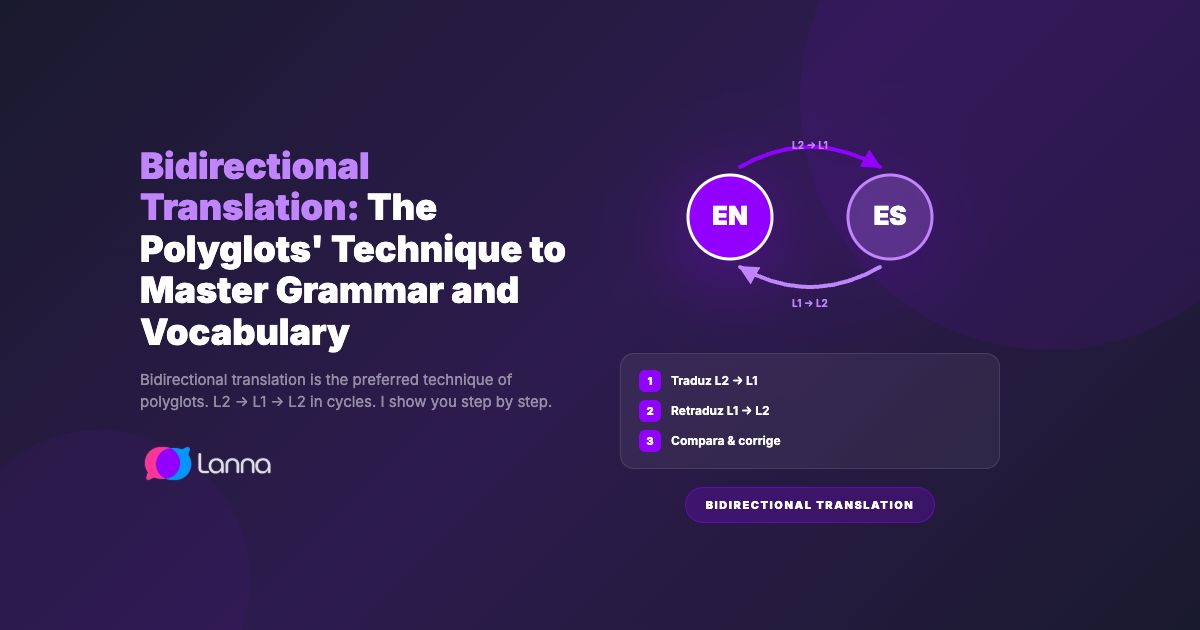
The 4 skills reinforce each other. When you listen + read at the same time, you’re training two at once and accelerating the process a lot. When you do shadowing (imitating what someone else said), you’re training listening + speaking at the same time. Seeking combinations is smart.
Part 4: Routine — 15 to 30 minutes every day
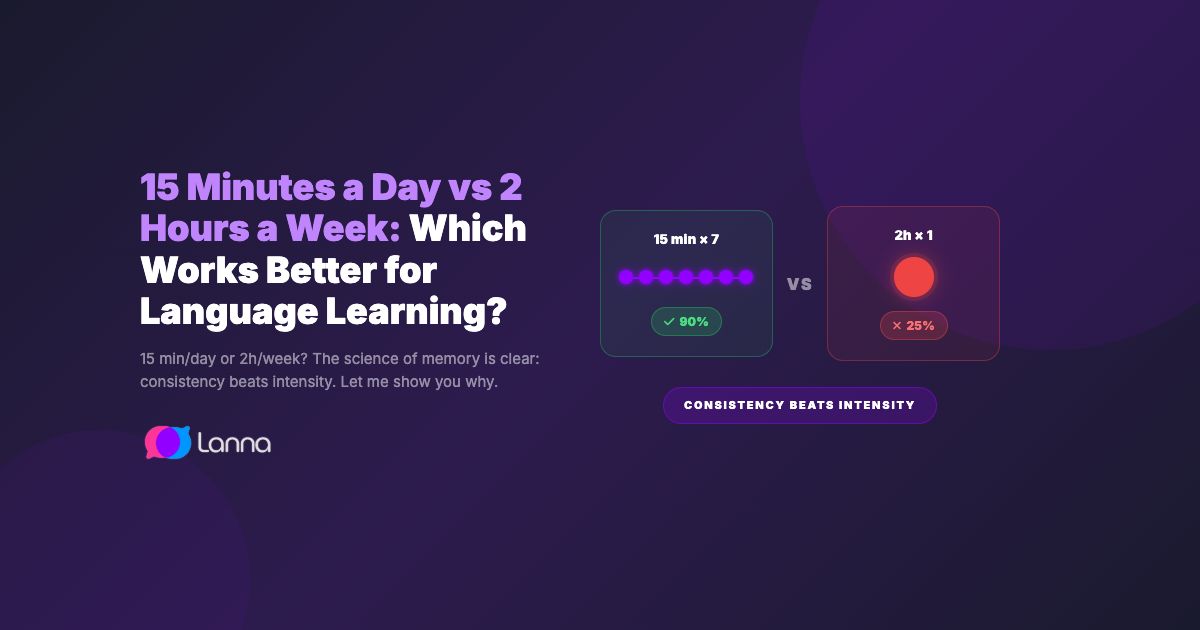
The most important routine for language learning. 15 to 30 minutes a day. EVERY day. No weekends off, no skipping 3 days and compensating with 2 hours later. It doesn’t work that way.
For those already at A2/B1 tackling English in 2026, this is the routine I recommend:
- 0 to 10 min — Input: open a short video at your level (TED-Ed, vlog, series with subtitles). Listen + read + pause when needed.
- 10 to 15 min — Pronunciation: take 2-3 sentences from the video and do shadowing. Repeat each 3 times.
- 15 to 25 min — Production: alternate between conversing with AI by voice and writing a paragraph about what you learned.
- 25 to 30 min — Review: open the flashcards and review the new words you saved.
If 30 minutes is too much for you, do 15. If you can only do 10, do 10. The important thing is to ignite the flame every day. If you want a more detailed schedule, I wrote a guide just about study routines.
How long does it take to become fluent?
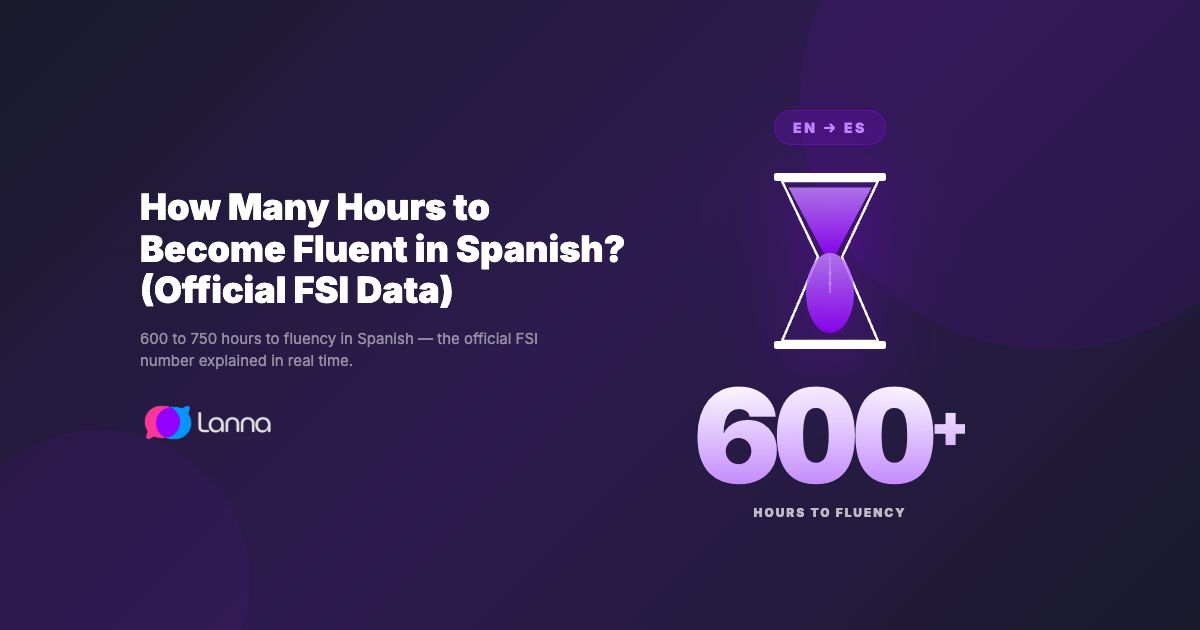
For Portuguese speakers, English takes between 600 and 750 hours of active study. This is data from the Foreign Service Institute (FSI) of the United States, which trains diplomats. It sounds like a lot, but divide by 25 minutes a day: that’s 22 months. About 2 years to reach a professional level.
For languages closely related to Portuguese (Spanish, Italian, French), it takes half the time — 300 to 400 hours. For difficult languages (Japanese, Chinese, Korean, Arabic), 2200 hours or more. I wrote a detailed post about how long it takes to learn a language if you want to dive deeper.
Repeating: forget "fluent in 6 months". That’s a trick from courses to sell. You won’t reach real fluency in 6 months. But you will be able to manage, read basic texts, and understand videos with subtitles. That is already a lot.
Mistakes that make most people give up
- Studying only when you have time. It doesn’t work. Do it every day, even 10 minutes. Consistency trumps everything.
- Too difficult material. If you understand less than 80%, you’re out of your level. Lower the difficulty without shame.
- Only grammar, zero conversation. Grammar without real practice becomes dead theory. Talk to people (or with AI).
- Not reviewing. New words without review disappear in 48 hours. Save them in flashcards with spaced repetition.
- Giving up on the plateau. Everyone gets stuck at the intermediate level. It's normal. There’s a specific post about the learning curve.
Frequently Asked Questions
Can I learn without a teacher?
Yes. Most polyglots learn on their own with the right material and daily routine.
How long to become fluent?
English: 18-24 months of daily study. Closely related languages: half that. Difficult languages: 3-5 years.
Vocabulary or grammar first?
Vocabulary. 500 frequent words + basic grammar = you can manage in any conversation.
Is talent necessary?
No. Talent is a myth. It's about dedicated hours with the right method.
How many hours a day?
15 to 30 minutes is sufficient, as long as it’s every day.
So, where do I start?
Three steps today: choose the language, set a routine of 15 minutes a day at a fixed time, and open the first session now. Not tomorrow. Now. The difference between those who learn and those who give up is the first week of consistency.
If you want a method that combines all this into one flow — content at your level, pronunciation corrected by voice, spaced flashcards, progress history, curated library — Lanna was built exactly for that.